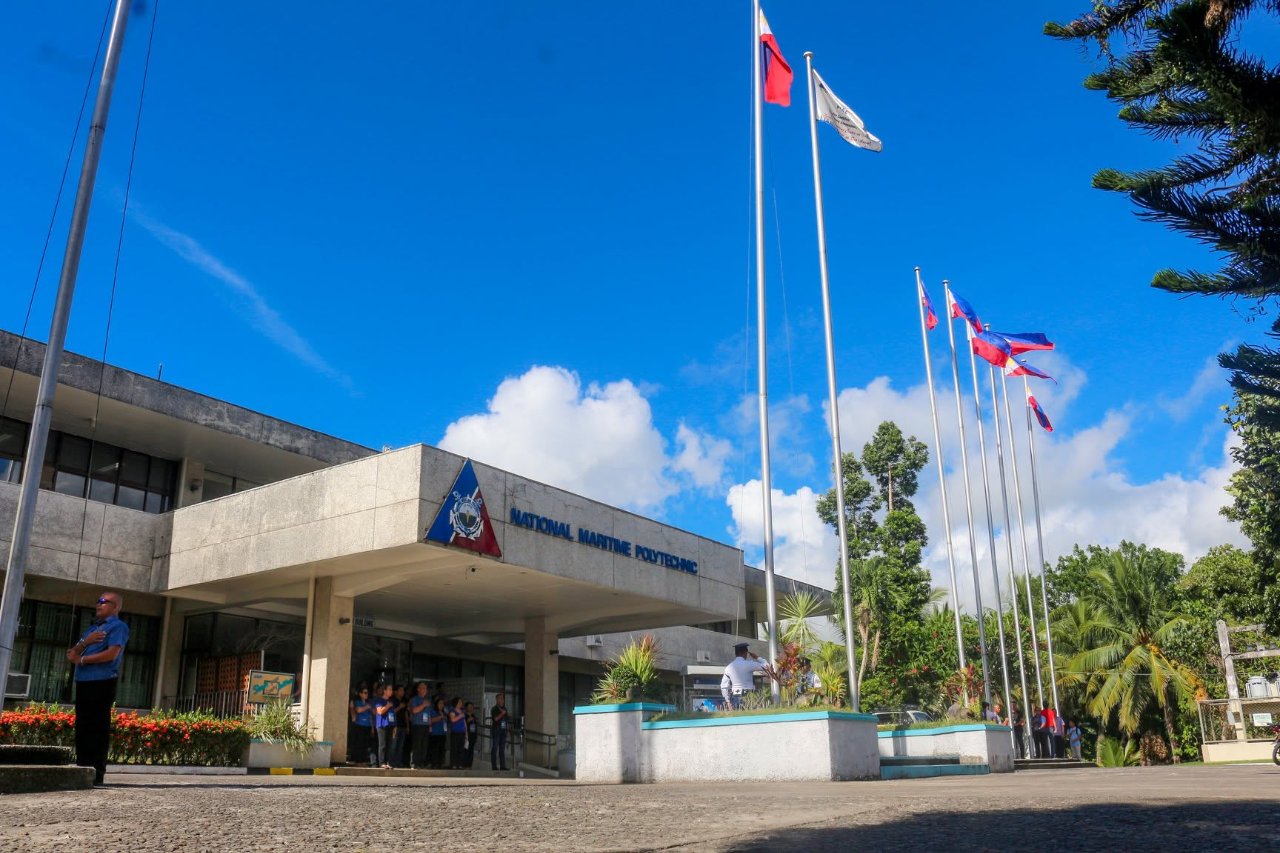
The National Maritime Polytechnic (NMP) began offering all 55 of its regular maritime training courses free of charge on August 3, opening a government-funded pathway for Filipino seafarers seeking mandatory certification, refresher training and career advancement.
The program covers Standards of Training, Certification and Watchkeeping-mandated courses in deck, engine, safety, security, medical and specialized fields, together with non-STCW programs intended to improve professional competence and employability. The policy was approved by Migrant Workers Secretary Hans Leo Cacdac through DMW Memorandum Order No. 360.
NMP Executive Director Victor del Rosario said the initiative removed the fees previously collected for 22 regular training courses. Those courses were added to 33 programs already offered without charge, bringing the total number of free regular courses to 55. It is the first time since NMP’s establishment that all of its regular maritime courses have been covered by the subsidy.
Relief from recurring training expenses Mandatory training is one of the recurring costs associated with entering and remaining in the maritime profession.
Seafarers may be required to complete full courses, updating programs or refresher training before obtaining or renewing certificates. Additional courses are often needed when moving from support-level positions to operational or management ranks.
Before the new policy, NMP fees ranged from approximately ₱714 to ₱6,000, depending on the program and duration. Its 12-day Basic Training program cost ₱2,700, while similar training at private institutions could cost between ₱6,000 and ₱7,000. Eliminating NMP fees can therefore reduce the cost of completing several courses during a seafarer’s limited vacation period.
Training expenses are commonly paid alongside medical examinations, certification applications, transportation, food, lodging and documentary requirements. These costs can accumulate before a seafarer receives a confirmed vessel assignment or begins earning onboard wages.
Courses covered by the program The free-training policy applies to NMP’s regular full, refresher, operational-level and management-level programs.
Available offerings include bridge and deck subjects, engineering courses, safety and survival training, security programs, medical courses and specialized professional subjects.
Previous NMP free-course announcements have included programs such as Ship Simulator and Bridge Teamwork, Operational Use of Electronic Chart Display and Information Systems, Safe Mooring Practices, Trim and Stability, Cargo Handling and Care of Cargo, updating courses for deck and engine officers, Mental Health Awareness for Seafarers and Anti-Piracy training.
Course availability remains subject to training schedules, class capacity, prerequisites and MARINA accreditation or approval.
Professional Development Courses that fall outside the regular program may continue to carry fees, although NMP said they would be offered at substantially reduced rates.
Applicants should therefore verify that a selected program is included in the full subsidy before making travel and accommodation arrangements.
Priority system for limited places NMP expects the removal of fees to increase demand considerably.
To manage available seats, the institution said it would implement guidelines covering admission, eligibility, enrollment and prioritization.
Active seafarers and practicing maritime professionals are expected to receive first priority. Maritime cadets and students form the second group, followed by personnel from partner organizations in the government and private sectors, including the Philippine Coast Guard and the Maritime Industry Authority.
Allied professionals seeking work aboard cruise and passenger vessels may also qualify for selected programs. These may include applicants from hospitality, medical, security and related fields whose intended shipboard positions require maritime familiarization or safety training. Registration is available through NMP’s online enrollment system, allowing applicants to submit their information before traveling to the institution’s main training center.
Slots remain limited, and meeting the minimum entry requirement does not automatically guarantee admission to a particular class.
Access remains a geographical challenge Although the training itself is now free, most courses are conducted at NMP’s main complex in Tacloban City.
The institution also maintains a liaison office in Makati, but seafarers from Luzon, Mindanao and distant island provinces may still need to pay for transportation, food and accommodation while attending face-to-face programs. The cost of reaching the training center may therefore remain a significant barrier, particularly for unemployed seafarers and cadets.
To address geographical access, NMP is studying the establishment of regional training centers in Tanza, Cavite, and Davao City.
Feasibility studies are being conducted with the Development Academy of the Philippines. The proposed Cavite facility would serve Luzon, while the planned Davao center would expand access for Mindanao-based maritime workers.
NMP has held a 2.2-hectare property in Tanza since 1995. It was also granted a 5,000-square-meter site within the proposed Davao Regional Government Center in 2021. The regional facilities remain proposals and will require funding, construction, equipment, accreditation and staffing before they can accept trainees.
Online programs under development NMP is also developing at least seven courses for possible distance-learning delivery.
The proposed online programs remain subject to MARINA evaluation and approval. Courses requiring practical demonstrations, simulator exercises or physical assessment will still require face-to-face attendance. NMP already conducts selected online programs in areas such as substance-abuse prevention, gender sensitivity and health awareness, although class sizes and schedules are limited.
Distance learning could allow the institution to serve more participants without requiring every trainee to travel to Tacloban. It could also help active seafarers complete suitable theoretical programs during leave periods.
Quality-assurance requirements for online maritime instruction, however, must remain consistent with national certification rules and applicable STCW standards.
Capacity and quality under pressure NMP trained 22,741 individuals in 2025, its highest reported annual figure. The institution attributed the increase to additional batches, larger class sizes and partnerships with maritime stakeholders.
It has issued nearly 500,000 training certificates and completed 67 maritime research studies since its establishment under Presidential Decree No. 1369.
Free training could push annual demand well beyond previous levels.
The challenge will be to increase the number of available places without compromising instructor qualifications, simulator time, equipment availability, practical exercises or assessment integrity.
Long waiting lists could reduce the program’s usefulness for seafarers who have only a few months of leave and must complete several requirements before joining their next vessel.
The government will also need to ensure stable funding. Training requires instructors, consumables, facility maintenance, simulator upgrades, safety equipment and administrative support even when participants are no longer charged fees.
Investment in the maritime workforce The program supports the Magna Carta of Filipino Seafarers, which identifies equitable access to education, training and development as a state policy.
By absorbing the cost of regular training, the government is treating maritime competency as a national workforce investment rather than an expense borne entirely by individual seafarers.
The success of the initiative will ultimately be measured by access and results.
Free courses must translate into actual training places, completed certificates, successful deployment and promotion. They must also reach seafarers beyond those who can easily travel to Tacloban.
For thousands of Filipino maritime professionals, the removal of training fees represents immediate financial relief. The next task is to ensure that the opportunity remains available, properly funded and supported by the same quality standards Filipino seafarers are expected to demonstrate aboard the world’s ships.